

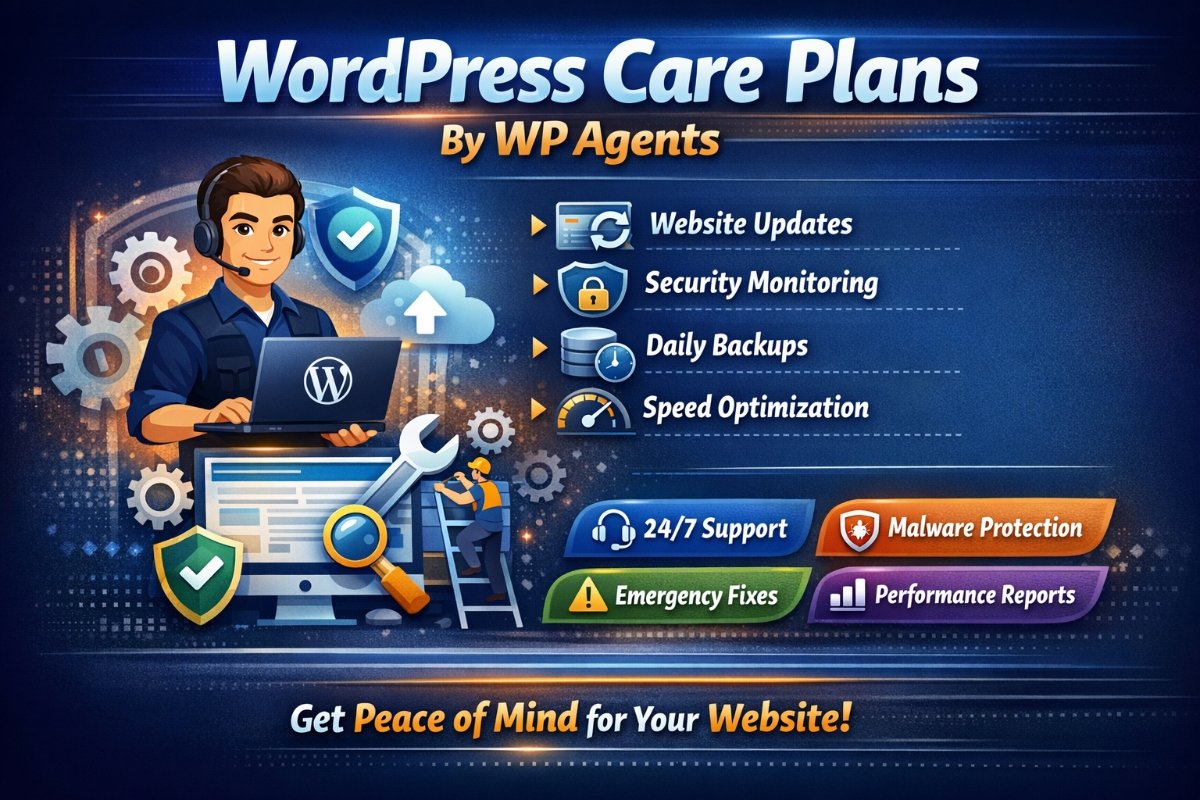
What WordPress care plans actually include, how they protect growing websites, and why businesses rely on them to avoid downtime, hacks, and slow performance.
Running a WordPress website is a bit like owning a car. Sure, it runs great when it’s brand new, but without regular maintenance, oil changes, and the occasional tune-up, things start to go wrong. You wouldn’t drive your car for years without servicing it, right? The same principle applies to your website.
That’s where WordPress care plans come in. If you’re serious about growing your online presence, understanding what these plans offer—and why they matter—could be the difference between a thriving website and one that’s constantly battling technical issues.
Understanding WordPress Care Plans
A WordPress care plan is essentially a subscription service that keeps your website running smoothly, securely, and efficiently. Think of it as having a dedicated team (or specialist) watching over your site, handling all the technical heavy lifting so you can focus on what you do best—running your business.
These plans typically bundle together various maintenance tasks that need to happen regularly. We’re talking updates, backups, security monitoring, performance optimization, and troubleshooting. Instead of scrambling to fix things when they break or remembering to update plugins every few weeks, you’ve got professionals handling it proactively.
Different providers offer different levels of service. Some basic plans might just cover updates and backups, while comprehensive packages can include everything from SEO monitoring to content updates and custom development hours. The key is finding a plan that matches your website’s needs and your business goals.
The Core Components of a Care Plan
Most WordPress care plans include several fundamental services. Regular updates are at the heart of every good plan—this means keeping your WordPress core, themes, and plugins current. It sounds simple, but compatibility issues between updates can break your site if not handled carefully.
Backups are another non-negotiable component. Imagine waking up to find your website hacked, corrupted, or accidentally deleted. With regular backups (ideally daily), you can restore your site to its previous state quickly. Good care plans don’t just create backups; they test them to make sure they actually work when you need them.
Security monitoring has become increasingly critical as websites face constant threats from malware, hackers, and vulnerabilities. Care plans typically include security scans, firewall protection, and immediate response to any breaches. Some also offer malware removal and security hardening to prevent future attacks.
Performance optimization is where things get interesting. A slow website frustrates users and hurts your search rankings. Care plans often include speed testing, image optimization, caching setup, and database cleanup to keep your site loading quickly. For growing websites, this can directly impact your bottom line.
Why Growing Websites Can’t Afford to Skip Maintenance
Here’s the thing: when your website is small and simple, you might get away with minimal maintenance. But as your traffic grows, your content expands, and your business becomes more dependent on your online presence, the stakes get much higher.
Downtime becomes exponentially more expensive. If your website goes down for an hour when you’re getting 100 visitors a day, that’s unfortunate. If it happens when you’re getting 10,000 visitors and processing dozens of transactions? That’s potentially thousands of dollars in lost revenue, not to mention the damage to your reputation.
Security vulnerabilities multiply as your site grows. More traffic means more visibility to bad actors. More plugins and features mean more potential entry points for attacks. A single security breach can compromise customer data, destroy trust, and even result in legal consequences. The cost of prevention through a care plan is minimal compared to the cost of recovery after an attack.
Performance degradation sneaks up on growing sites. What worked fine with 50 blog posts and minimal traffic starts crawling when you’ve got 500 posts, multiple plugins, and thousands of daily visitors. Regular optimization keeps your site fast as it scales, preventing the gradual slowdown that many growing sites experience.
The Hidden Costs of DIY Website Maintenance
Many business owners start out managing their own WordPress maintenance. It seems straightforward enough—click a few update buttons, install a backup plugin, maybe run a security scan now and then. But this DIY approach has hidden costs that aren’t always obvious.
Your time is valuable. Every hour you spend troubleshooting plugin conflicts, researching security issues, or optimizing images is an hour you’re not spending on your core business activities. For a business owner billing at even a modest rate, those hours add up quickly. Often, the monthly cost of a care plan is less than the value of the time you’d spend doing it yourself.
Expertise matters more than you might think. WordPress maintenance isn’t just about clicking update buttons. It’s about understanding how different components interact, recognizing warning signs before they become problems, and knowing how to fix issues quickly when they arise. Professionals who manage dozens or hundreds of WordPress sites have seen every problem before and know the solutions.
The stress factor is real. There’s a particular kind of anxiety that comes with being responsible for your own website maintenance. Every update becomes a moment of tension—will this break something? Late-night notifications about security issues or site downtime can disrupt your life. A care plan transfers that burden to someone else, giving you peace of mind.
How Care Plans Support Business Growth
Beyond just keeping your site running, the right care plan actively supports your growth. Performance optimization means more visitors convert into customers because they’re not frustrated by slow loading times. Better security means you can confidently collect customer information and process transactions. Reliable backups mean you can experiment with new features without fear.
Many comprehensive care plans include strategic support that helps your website evolve with your business. Maybe you need an e-commerce function added, or your blog needs restructuring for better SEO. Having ongoing access to WordPress experts means you can make these improvements without starting from scratch or searching for a new developer each time.
Analytics and reporting provided by many care plans give you insights into how your site is performing. You’ll know your uptime percentage, how fast your pages load, and whether security threats have been detected and blocked. This data helps you make informed decisions about where to invest in your website next.
Scalability becomes much easier with professional maintenance. When your traffic suddenly spikes because of a viral post or successful campaign, a well-maintained site with performance optimization can handle it. When you need to add new functionality, you’ve got experts who already know your site intimately and can implement changes efficiently.
Choosing the Right Care Plan for Your Needs
Not all care plans are created equal, and the right choice depends on your specific situation. A small business blog has different needs than a growing e-commerce store or a membership site with thousands of users.
Consider your traffic levels and complexity. Higher traffic sites need more robust hosting, more frequent backups, and more intensive performance optimization. Sites with e-commerce, membership areas, or custom functionality need more specialized support.
Think about your technical comfort level. If you’re happy handling basic tasks like content updates and want professionals only for the complex stuff, a basic plan might suffice. If you prefer to be completely hands-off with technical matters, a comprehensive managed service makes more sense.
Look at what’s included beyond the basics. Some plans throw in things like monthly content updates, SEO monitoring, accessibility checks, or even dedicated development hours. For a growing site, these extras can be incredibly valuable and might save you from needing multiple separate services.
Check the response times and support quality. When something goes wrong, how quickly will they fix it? Is support available 24/7 or just during business hours? Do they have a phone number you can call, or is everything handled through tickets? For mission-critical websites, fast, accessible support is worth paying more for.
The Bottom Line
WordPress care plans aren’t an unnecessary luxury—they’re a practical investment in your website’s health and your business’s growth. They provide the foundation of reliability and security that allows you to focus on creating great content, serving your customers, and building your business.
The question isn’t really whether you can afford a care plan. For a growing website, the more relevant question is whether you can afford not to have one. The costs of downtime, security breaches, and lost opportunities far exceed the monthly investment in professional maintenance.
As your website grows, it becomes increasingly central to your business success. Treating it with the care it deserves—through regular professional maintenance—isn’t just smart; it’s essential. A care plan gives you the peace of mind to sleep soundly knowing your digital storefront is secure, fast, and always available to serve your growing audience.
FAQS about WordPress Care Plans
Content Transparency Notice
This article was created with the assistance of AI technology and has been carefully reviewed, edited, and verified by our editorial team to ensure accuracy, relevance, and value for our readers. We use AI as a tool to enhance our content creation process while maintaining high standards of quality and originality. All information provided has been fact-checked and reflects our commitment to delivering helpful, trustworthy content. If you notice any errors or have suggestions for improvement, please feel free to contact us.